Monday, October 24, 2005

Saturday, October 22, 2005

Recent Search Strings Leading to the Fobcave

  • men wearing tights
  • "elders quorum"

and, of course

  • find naked women

Black and White

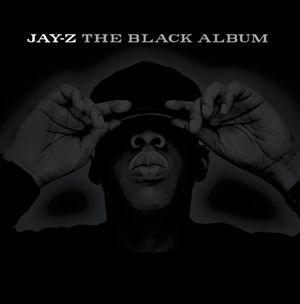
No, I'm not talking about Michael Jackson. I'm talking about this:


+

=


Forgive me if you're way hipper than I am and you already knew about this (it's about a year and a half old), but I just discovered it yesterday. A DJ well-known in underground hip-hop, Danger Mouse, took the a capella vocals from rapper Jay-Z's Black Album and remixed the songs exclusively using samples from the Beatles' famous White Album. I'm not really into Jay-Z--his lyrics usually seem kind of silly to me--and although I like the Beatles I can't say I'm a fanatic, but I think this is the coolest concept ever.

EMI and Sony--the people who own the rights to the Beatles' music--however, didn't agree. They threatened to sue Danger Mouse and anyone who carried his Grey Album on the internet (it never made it to an official release due to the legal conflicts, so it exists only as an electronic bootleg). But thankfully there exist organizations such as Stay Free!, who sponsor the Illegal Art exhibit, including a history and complete download of the album in order to protest laws that don't recognize the difference between stealing and sampling. I suspect that if Shakespeare were alive today, whoever wrote the original versions of Hamlet, Macbeth, and Romeo & Juliet would sue him. I mean, c'mon, people, this is art. Be flattered that someone used a few bars of your music to make something entirely different and move on.

Thursday, October 20, 2005

Young Men in Libraries

In "The American Scholar," Ralph Waldo Emerson wrote, "Meek young men grow up in libraries, believing it their duty to accept the views, which Cicero, which Locke, which Bacon, have given, forgetful that Cicero, Locke, and Bacon were only young men in libraries, when they wrote these books." He goes on to explain that, while genius is often the enemy of genius--meaning that if we spend all our time reading the brilliant words of dead people we'll never write brilliant words of our own--we should not completely ignore the words of those who have gone before us:
Undoubtedly there is a right way of reading, so it be sternly subordinated. Man Thinking must not be subdued by his instruments. Books are for the scholar's idle times. When he can read God directly, the hour is too precious to be wasted in other men's transcripts of their readings. But when the intervals of darkness come, as come they must, — when the sun is hid, and the stars withdraw their shining, — we repair to the lamps which were kindled by their ray, to guide our steps to the East again, where the dawn is. We hear, that we may speak. The Arabian proverb says, "A fig tree, looking on a fig tree, becometh fruitful."
As I've been reading the Bible this week--Matthew with Foxy J and Timothy on my own--I can't help but see it this way. Paul, no doubt, was a great man. He was inspired to write a lot of wonderful things. One scripture that I have been thinking about a lot is from 2 Timothy 1.7: "For God hath not given us the spirit of fear; but of power, and of love, and of a sound mind." God doesn't intend for us to live our lives based on fear of consequences. He wants us to be courageous and loving and wise. He wants us to think for ourselves.

[Musical Interlude]
"Brain Washers" by Blackalicious:
Brain washers
It's when you think how they wanna think
Speak how they wanna speak
Livin' in defeat
When you don't wanna question what they teach
As the truth
With no proof
With the fear of burnin' in eternal heat.
[/Musical Interlude]

At any rate, that was a digression. The point I was getting to is that, besides these wonderful, inspired things Paul said, he also says a lot of really stupid things. The man is a sexist and a homophobe. Sure, that was probably the norm for his time; I'm not trying to say he's a horrible person, but that he's a human being. Not every word he wrote came straight (or even indirectly) from the mouth of God (who, I might add, cannot possibly be a sexist and a homophobe and still be the God I pray to).

This being the case, I have to wonder what then is the point of holy scripture? Or prophets, for that matter? If we can't trust the Bible to be the literal word of God, why bother reading it? Why would God call people to teach his children if he understands that these people he calls are imperfect and bound to say some pretty stupid things? Which is where Emerson comes in. Prophets and scriptures don't replace our ability to "read God directly," but remind us where to look when we forget how to read God. They point us in the right direction, but after that it's up to us to figure out what God is telling us, rather than rely on the words of "young men in libraries."

I can believe that Matthew and Paul were good men who were inspired by God, despite their failings. For that matter, I can believe that Joseph Smith and Brigham Young and Gordon B. Hinckley were/are good men inspired by God. What I'm unsure of is, once they've reminded us that we can talk to God and get personal direction directly from him--a principle Joseph Smith's story demonstrates beautifully--what then is their purpose? Once a prophet has successfully turned my attention to God, what then can he tell me that God can't tell me himself?

Monday, October 17, 2005

Well, At Least He's Not... Oh, Never Mind

Last week I had my students write reviews of books they've read recently. Nine of them wrote about Harry Potter, five wrote about Ender's Game, and three about Children of the Promise. My favorite, though, was a review of Carol Lynn Pearson's Goodbye, I Love You. The student concludes an excellent review with the following:

This book did make me appreciate my husband more. As I was reading the part where he finally tells her he has had affairs with other men, I looked over at [husband's name]. He was sitting there, yelling and screaming at the TV because his football team was losing, and I thought, "Well, at least he's not gay."
Further Confessions
OR
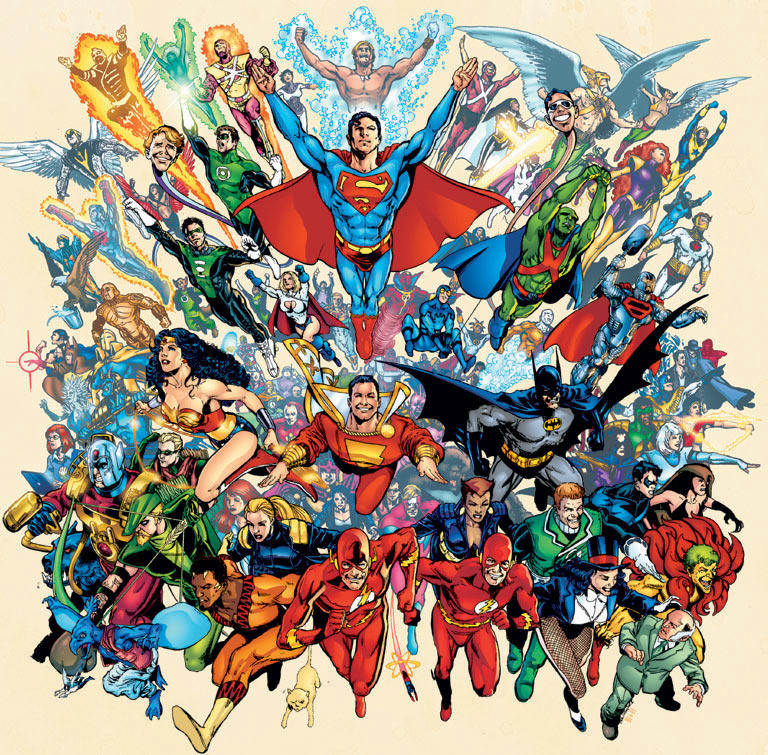
You Might Be a Geek If You Can Name All These Characters...


Tolkien Boy once told me that if he had invented a fictional character as complex as I am, he would be proud of himself. I took it as a compliment. He was referring, if I recall correctly, to the fact that I am a politically liberal married gay Mormon who listens to rap music, writes angsty young adult literature, and reads comic books. A renaissance geek, if you will.

I remember the first comic book I bought. It was Batman 476, cover date Apr 1992 (though it actually came out in February--that's just how cover dates on comics work), written by Alan Grant and illustrated by Norm Breyfogle (to this day one of my favorite writer/artist teams). On the cover, Batman unmasks himself to Vicki Vale. The character Vicki Vale had only returned to the comics in the past couple years, in response to her lead role in the popular 1989 movie Batman. The movie was also what had sparked my interest in Batman and led me to make the walk down Keeaumoku Street to Jelly's Comics in search of a Batman comic. Sure, I had watched the old Batman show from the sixties, as well as Superfriends, when I was a kid, but that was kidstuff. Tim Burton's appropriately gothic vision of the Dark Knight convinced me that, as a twelve-year-old, I could still think Batman was cool. The comic books I started avidly collecting after that first one reinforced this belief.

You see, the majority of comic books--superhero comics, at least--are written for adolescent boys. Meaning they are written with such a level of maturity to convince teenagers who think they're mature that the comics they're reading are written for adults. The ploy worked on me. I read comics because I loved pointing out to the naive who believed comics were for kids that, hey, the Joker just killed twenty people and Batman said "damn" so of course these aren't for kids.

I could easily psychoanalyze another half a dozen reasons why I read comics as a teenager: they were filled with buff men wearing tights; Batman and Superman became my father figures; the DC Universe, a complex landscape populated by literally hundreds of fictional characters with interweaving backstories, was a fantasy world I could escape to when real life was less than ideal; as an unathletic geek I could live out power fantasies through the aforementioned buff men wearing tights; high school didn't challenge my mind enough so I filled it with trivia such as Superman's height (6'3"), Batman's first appearance (Detective Comics #27, May 1939), and the Elongated Man's secret identity (Ralph Dibny). Okay, I think that was only five, but I could easily come up with a sixth one if I really wanted to. I just don't want to.

At any rate, one has to wonder why, as a going-on-twenty-six-year-old, I continue to read superhero comics. Part of me still wants to insist that comic books are a genuine literary form, just as valid as any other genre or medium. And they are. Some comics, at least, really are written for educated adults. But when I read those comics it's mostly just to prove a point--that such things exist, because I believe they should. The comics I read on a regular basis and look forward to every month are superhero comics, which, no matter how you look at it, are written for teenaged males.

Part of the reason I enjoy superhero comics still is the same reason I got addicted to watching Days of Our Lives with my older sisters when I was ten. No, not sex. It's the serial nature of the genre--when I read a book and I get into a character, I hate to see the book end because I want to know what happens next. I really like that over the past thirteen years I've watched Tim Drake, the latest Robin (as in Batman & ...), grow from an unsure fourteen-year-old to a slightly less unsure sixteen-year-old (I'll save time and aging in comics for another post).

Another part of it, I'm sure, is the nostalgia factor. Reading comics brings me back to my youth. But then, considering how much I enjoyed my youth, I'm surprised I'm not running away from it as fast as I can. Maybe it's just that I'm still a teenager at heart. Hence the writing angsty young adult literature thing, and possibly the rap music thing--the media librarian I work with insists that hip-hop is primarily for adolescents despite my insisting to the contrary.

Then again, maybe it's just that I like shocking people. "You have a master's degree in English and you read comic books?" But I hope I'm not really that shallow.